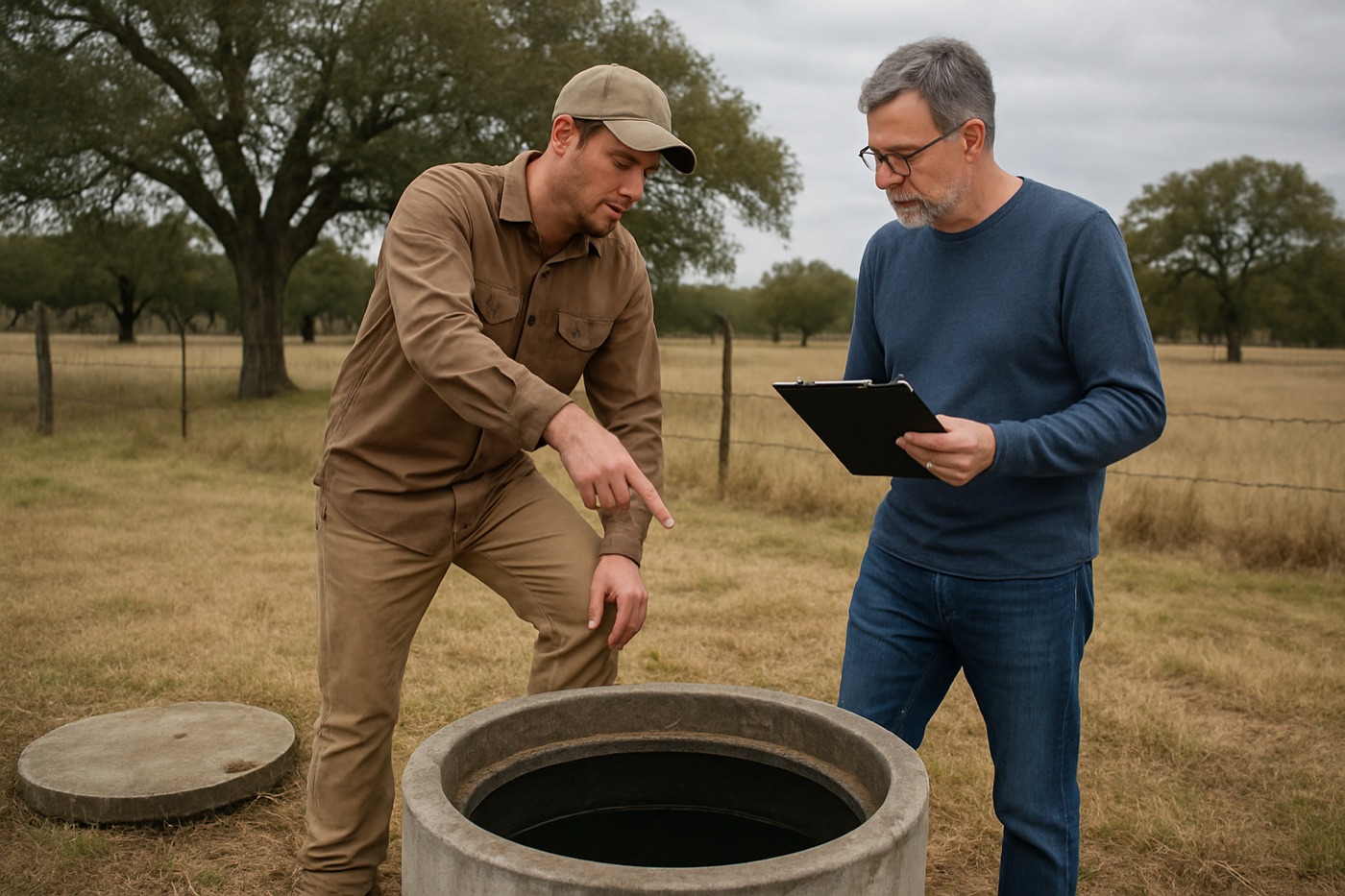
The inspection that actually answers the question
The question is simple: will this system cost me five figures in the next few years? A drive-by "septic check" can’t answer it. The version that can: tank pumped and examined empty (cracks, roots, baffle condition), lines flow-tested from the house, drainfield walked and probed, and — the tell that matters most — the empty tank watched for water running back in from the field. Backflow means a saturated field, and a saturated field means the expensive conversation happens before closing instead of after. If it’s an aerobic system, every component gets run: compressor, sprayers, chlorinator, alarms, and whether the maintenance contract is current and transferable.
Pull the county file — it’s the cheap part
Bastrop County permits every septic install, which cuts both ways for a buyer: there should be a file on this system at Development Services ((512) 581-7176) — and if the system in the yard doesn’t match the system on paper, or there’s no paper at all, you’ve found something important. Unpermitted systems and undocumented "repairs by a guy with a backhoe" are common on older rural places, and they become your compliance problem at the moment of maximum leverage loss: after closing. The inspection includes checking the records; insist on it.
Timing: book the day you sign
A Texas option period runs 7–10 days, good septic crews in a boom county book out several, and buried lids take time to dig. Book the inspection the day the contract is executed and give the crew your deadline. Sellers: pre-inspecting before listing — pump-out done, paperwork organized, report in hand — is the single easiest way to keep a rural deal from wobbling at day 8.
Raw land counts too
Buying acreage near McDade or Paige to build on? There’s no system to inspect — but there’s a site evaluation to think about, because soil decides whether your build budget includes a $4,500 conventional system or a $15,000 aerobic one. Knowing that before you're locked in beats discovering it at permit time. Good local pros can read a site before you commit.
Common questions
What does a septic inspection cost in Elgin?
$550–$800 with the pump-out — the only version that genuinely inspects the tank and reads the drainfield. Buried lids can add excavation cost; mention it when booking.
The seller says it was "just pumped." Good enough?
A receipt is nice; it isn’t an inspection. A pump-out doesn’t evaluate the drainfield, scope the lines, test aerobic components or check county records — and "just pumped" occasionally means "just hid the evidence." Trust, then verify with your own inspector.
What’s the most common bad finding around here?
Tied race: aging drainfields on places that skipped pumping for a decade, and undocumented systems or repairs that never met the county. Both are negotiable before closing and expensive after.
Do manufactured homes need anything special?
Same inspection — with extra attention to whether the system was properly permitted and sized when the home was set, which is a recurring gap on older placements. The county file usually tells the story fast.
Book a septic inspection
Tell us the property address and your option-period deadline. These are time-sensitive — a local pro will call you back fast.
Got it — expect a call back shortly to get it scheduled inside your window.