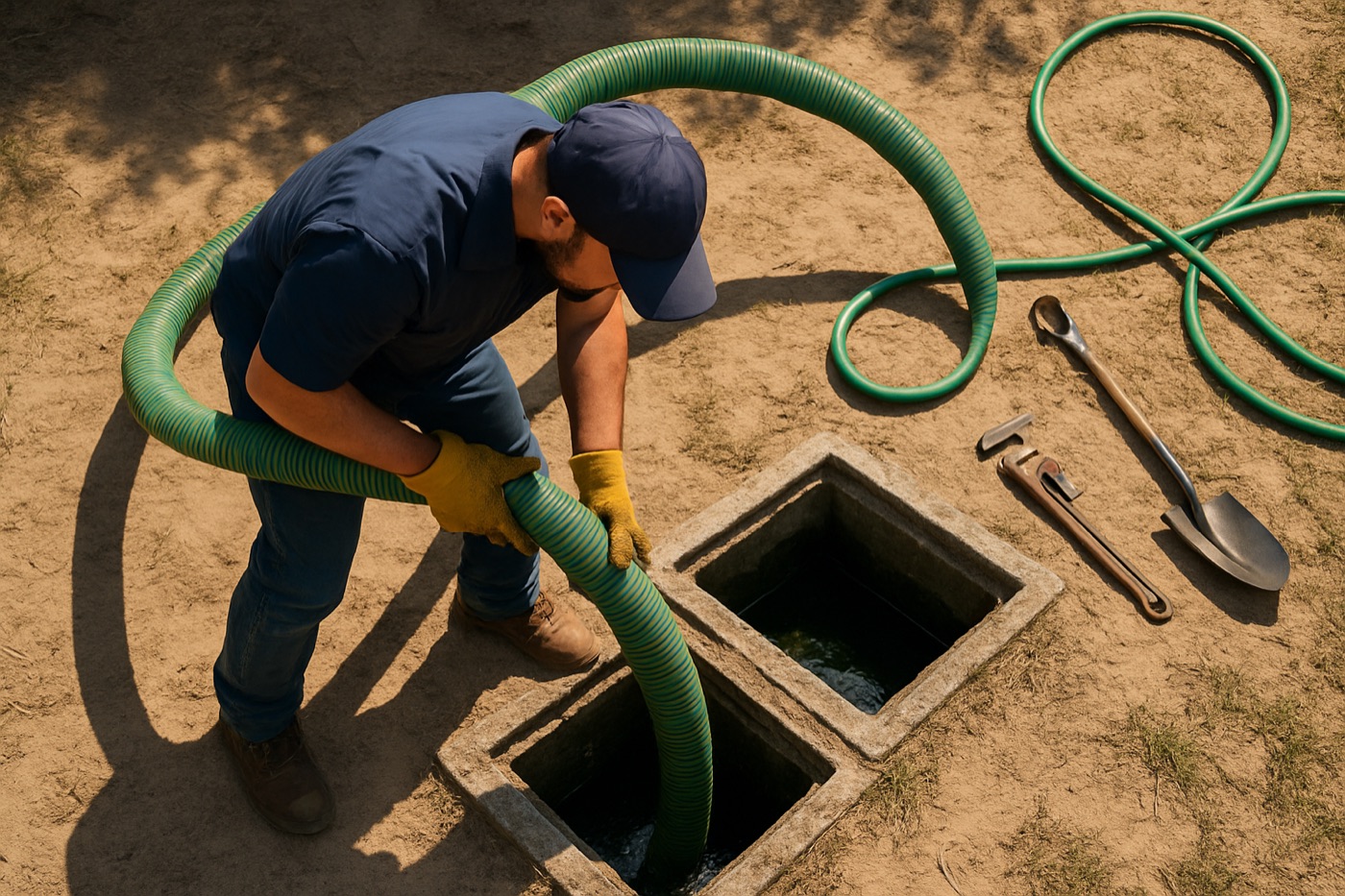
Complete means both compartments
Half the bad pump-out stories in Bastrop County come down to one shortcut: the crew pulls the easy liquid from the first compartment and leaves. A complete job opens both compartments, agitates and removes the settled sludge and the floating scum — the stuff that actually threatens your drainfield — and finishes with the check only an empty tank allows: baffles intact, inlet flowing, and critically, whether water seeps back in from the field. Ten extra minutes of looking, and you know things about your system that no full tank will ever tell you.
Price, lids and the riser math
$350–$550 covers a typical tank with lids you can reach. Buried lids — standard on the older systems around McDade and out the county roads — add digging: $425–$700 all-in. The one-time fix is risers ($150–$400 while the tank’s already open), which convert every future pump-out to the cheap kind and make inspections trivial. On a manufactured home or any place you plan to keep, risers pay for themselves by the second visit.
Schedule vs. symptoms
Three to five years is the rule for a typical household; lean toward three with a disposal, teenagers, or a tank on the small side. But symptoms outrank schedule: whole-house slow drains, gurgles, sewage smell on the evening air, or a suspiciously green stripe of grass in a dry August all mean "call now." And after the kind of gully-washers that roll through Bastrop County, a system that suddenly struggles may just have a waterlogged field — worth a professional read before anyone sells you a new one.
New to septic? You’re not alone here
Half the new arrivals off 290 have never owned a tank before. The crash course: nothing goes down the drain but wastewater and toilet paper (no wipes, no grease), the tank is not a garbage can, and the $400 you spend on schedule every few years is protecting a drainfield that costs ten to forty times that to replace. Ask questions during your first pump-out — a good operator is glad you’re asking.
Common questions
How much does septic pumping cost in Elgin?
$350–$550 for a typical accessible tank; $425–$700 if lids need digging. Risers ($150–$400, installed during the visit) end the excavation charges permanently.
How long does a pump-out take?
Usually 30–60 minutes on site for an accessible tank — longer with excavation or heavy solids. The truck hauls the waste to a licensed disposal facility; it doesn’t vanish, it’s regulated cargo.
Can I wait until it backs up?
You can, the way you can wait for the oil light. But by backup time, solids have usually been pushing into the drainfield for months — and that’s the component you can’t pump clean. Schedule beats symptoms every time it’s allowed to.
Do "flushable" wipes really matter?
They’re the pump crew’s least favorite product in Texas. They don’t break down, they mat into rafts, and they turn routine pump-outs into extra-labor pump-outs. Trash can, not tank.
Book a pump-out
Tell us where the property is and when it was last pumped (best guess is fine). A licensed local pro will call you back — usually the same day.
Got it — expect a call back shortly to schedule.